Being a new puppy owner is filled with joy and challenges. Leash training is a fundamental skill to teach your puppy, and this guide provides a comprehensive approach to make the process smooth and enjoyable.
When should you start leash training? Ideally, as soon as your puppy arrives home, typically around 12 weeks of age. Early training not only establishes good leash manners but also strengthens the bond between you and your furry friend. While some breeds may be more stubborn, consistent training and positive reinforcement will yield positive results.
Before you embark on leash training, there are essential steps to ensure a successful experience. Gathering the right equipment and preparing your puppy are crucial for a positive learning experience.
What do you need for leash training? First and foremost, a non-retractable leash, ideally four to six feet long, is recommended to prevent pulling and encourage controlled walking. A comfortable handle is also essential for your comfort.
Next, you’ll need a harness or collar. For stronger puppies, a harness or head halter might offer better control. Ensure the chosen option fits comfortably and doesn’t cause strain.
High-value treats are your best friend during training. They keep your puppy engaged and motivated to learn. Patience and dedication are equally important, as consistent, positive reinforcement is key to success.
Other helpful tools include a clicker for marking desired behaviors and a GPS tracker for peace of mind, especially during outdoor adventures.
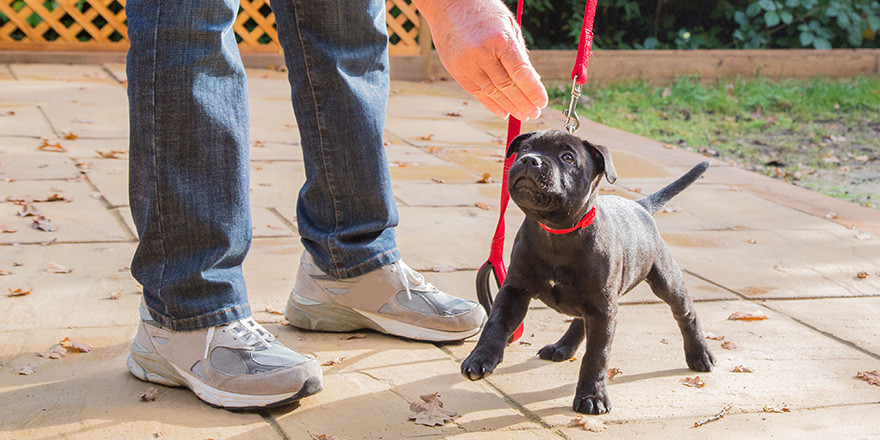 A cute black Staffordshire bull terrier puppy with a red collar and red leash, standing on three legs, being trained by a man in jeans and trainers holding a treat for the puppy.
Before starting leash training, introduce your puppy to the collar or harness gradually. Show them the equipment, offer treats and praise, and create positive associations. Start with short wearing periods and gradually increase the duration as your puppy becomes comfortable. Associate the collar or harness with positive experiences like playtime and meals.
Introduce the leash in a similar manner, allowing your puppy to explore and sniff it while offering praise and treats. Let them drag the leash around the house under supervision, and distract them with toys if they start to chew on it.
 Young hispanic woman playing ball with her pug dog at the park
Once your puppy is comfortable with the leash and collar or harness, begin practicing walking indoors in a familiar, distraction-free environment like your home or backyard. This helps them focus on you and the leash without external stimuli.
Start with short walks, keeping your puppy close and rewarding them for staying by your side. Maintain a short leash to prevent tangling and encourage focus. Gradually increase the walking distance and pace, introducing loose-leash walking when your puppy consistently walks beside you.
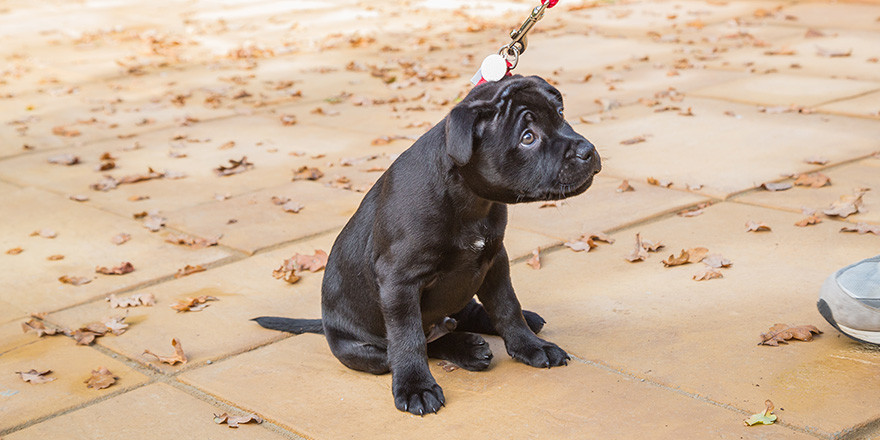 Puppy Staffordshire Bull Terrier sitting on a leash with a cute, reluctant, appealing look in his eyes, looking up the leash to the human on the end.
Consistent praise and positive reinforcement are vital throughout the training process. If your puppy lags or gets distracted, gently encourage them with treats and praise, avoiding pulling on the leash.
Heel training is another essential aspect of leash training. Start indoors, calling your puppy to your chosen side (left or right) and rewarding them for staying there. Use treats to lure them to your side as you take steps, and consistently reward them for staying close. Introduce the “heel” command once they understand the concept, and use a release word or phrase to signal when they can move freely.
As your puppy progresses, practice heel training outdoors, gradually increasing the distractions and challenges.
Dogs will inevitably encounter distractions during walks. If your puppy starts pulling, shorten the leash and stop walking. Use a verbal cue to signal the stop, wait for a loose leash, and reward them for complying.
Leash biting can be addressed by redirecting their attention. Stop walking, engage them with a command or trick, and reward them for complying before resuming the walk. Identify potential triggers for leash biting and adjust your walking route or environment accordingly.
 Young woman walking her dog on a street, having troubles holding him on a leash
For persistent pulling, avoid tugging on the leash. Stop, call your puppy back to your side, reward them, and resume walking. Increased exercise or dog sports can help energetic puppies burn off excess energy and reduce pulling behavior.