Caring for a kitten is similar to caring for a baby. You need to pay close attention to its essential needs, especially nutrition, as this provides the foundation for optimal growth and development. Feeding kittens can be complex due to several factors that must be considered. Understanding these factors is crucial to knowing how much to feed your kitten.
Kitten Nutrient Requirements
The first year of a kitten’s life is marked by rapid growth and development. Kittens can double or even triple their weight within weeks of birth. This growth spurt requires significant energy, meaning kittens need more calories than adult cats. While adult cats often eat once or twice a day, kittens require three to four meals daily.
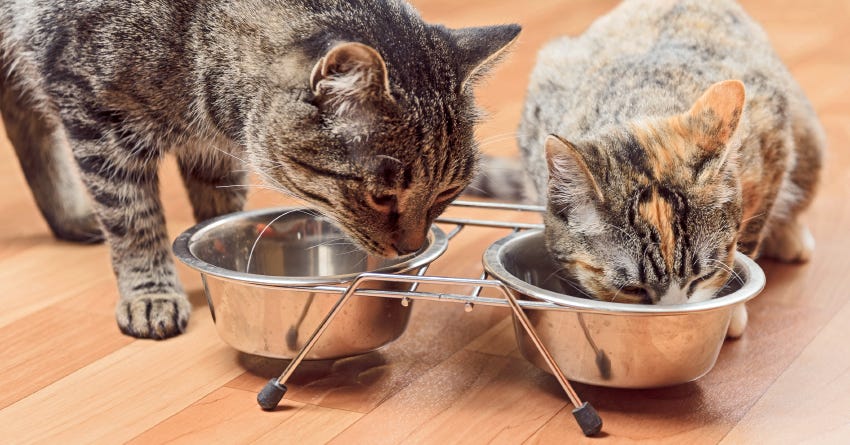
 Two kittens eating from a bowl
Kittens also need higher levels of protein, minerals, vitamins, and amino acids for cell and tissue development, particularly for their nervous system and muscles. Experts recommend that kittens derive 30% of their energy from protein, which serves as both an energy source and a building block for their bodies. While kittens need more protein, their requirements for fatty acids, vitamins, and fats are similar to those of adult cats.
Although some people feed kittens adult cat food, this should be avoided. Adult cat food formulations don’t meet the specific nutritional needs of growing kittens.
Wet Food vs. Dry Food for Kittens
Dry cat food kibble can be too hard for kittens’ small teeth to chew effectively. Additionally, dry food contains minimal moisture, which is essential for proper hydration. If you must feed dry food, soften it with water to make it easier to chew and increase its moisture content.

Canned wet food is generally a better choice for kittens. It’s more nutrient-dense, contains more moisture, and is often more palatable. However, wet food can be more expensive. Many cat owners combine wet and dry kitten food to provide balanced nutrition while managing costs. If feeding wet food, aim for at least four meals per day. A combination of wet and dry food can be fed twice daily.
Feeding Your Kitten by Age
Here’s a guide to help you determine how much to feed your kitten at different stages:
-
0 to 4 weeks: Mother’s milk is ideal. If unavailable, hand-feed kitten milk replacement formula. The guideline is 8 mL of formula per ounce of body weight.
-
4 to 8 weeks: Gradually introduce kitten food. Start with a 3:1 ratio of milk replacement to dry kitten food, then transition to a 2:1 ratio. Offer ¼ to 1/3 cup of kitten food per feeding.
-
2 to 3 months: Feed at least four times a day, offering 1/3 to ¾ cup per feeding. Kittens’ small stomachs necessitate frequent meals to meet their nutritional needs.
-
3 to 6 months: Feed three times a day, offering 1/3 to 1 cup of kitten food per feeding. If feeding wet food, provide 2/3 of a 3-ounce can per pound of body weight daily.
-
6 to 12 months: Provide ½ of a 3-ounce can of kitten food per pound of body weight daily.
Consult your veterinarian for personalized feeding recommendations. They can assess your kitten’s individual needs and provide specific guidance.